Jocelyn Curry

Art & Joie de Vivre

  • 1910 Postcard

    Apparently, 1910 was a good year for the greeting card industry.

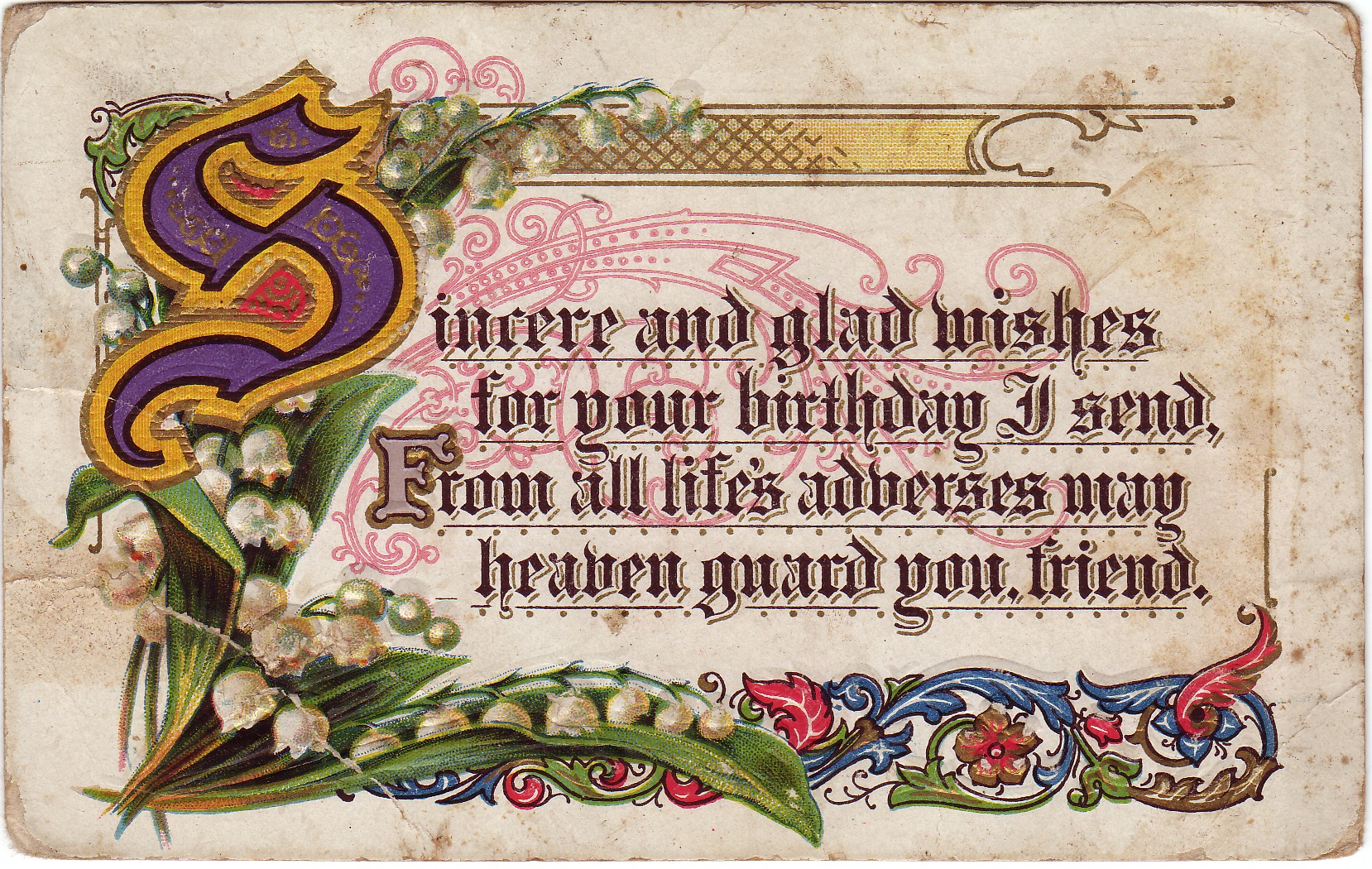
    I found this elaborate postcard last month in an astoundingly cluttered antique mall in Columbia, SC. When one designs a greeting card, one of the major considerations is the list of processes the final design will require. Budget determines whether the card will be printed simply with flat colored ink or be put through the presses several times to create a multi-textured and colored product.

    On this card: several flat spot colors, 4-color litho, complex embossing, gold ink and possibly a letterpress pass for some elements. I would guess that a lettering artist did the gothic calligraphy, an illustrator the lilies of the valley, and an illuminator the traditional acanthus leaf borders and versal letter S. Putting all this together for the printer was no small design feat, and the final price tag must have been high for this little card. It's a mini-manuscript!

    When I first saw the card, I took note of the red, swirling motifs behind the gothic sentiment. Although the trend appears to be fading, this is the same graphic device that has become so popular in current advertising design: layered graphics with ornate swirls moving behind the message. One hundred years ago, designers were already discovering the appeal of the same device.
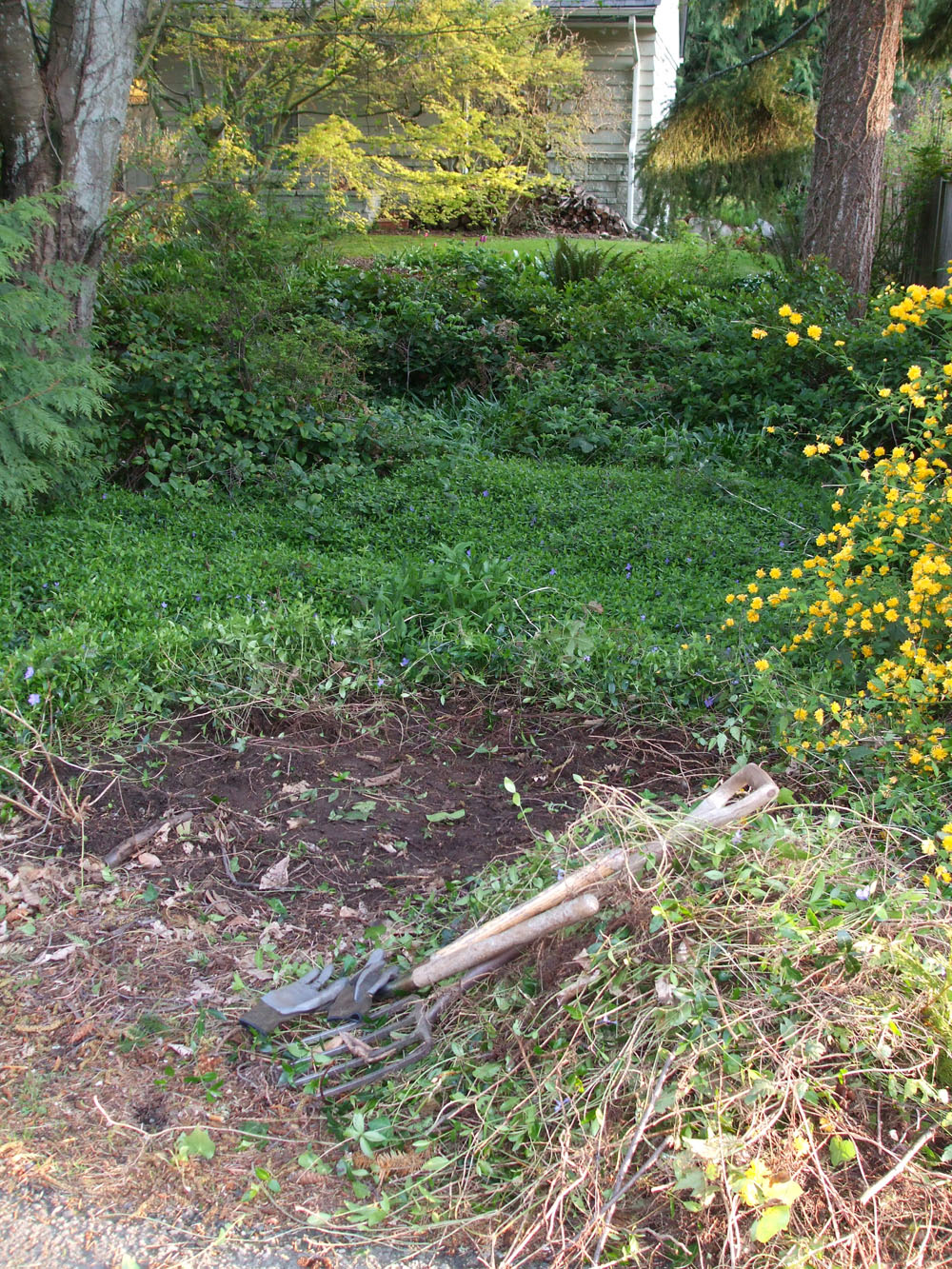
  • There's lots going on at my Shoreline, WA home. Project A: removal of invasive plants in our "wild" front property and the planting of natives. Yes, vinca minor makes a fine carpet, and it's pretty when it blooms, but it even chokes out English ivy. It would keep any hillside intact, too!  I want to return this area to its native state, like it was when we moved here and I would find delicate salamanders out under the woodsy debris. This year, our property has been selected to be on Shoreline's tour of wildlife-friendly yards (July 10 – more info to come). This is incentive for me to keep on grubbing and replanting.

    NativeHabA In this photo, you can see the Sea of Vinca spreading out over the struggling salal, false Solomon's seal, red huckleberry and sword fern. It's making its way under the native rhodies and around the bases of the alder, hemlock, and cedars. I started from the edge of the road, in the foreground. Note the first heap of vinca. Yes, it looks overwhelming, but with about 30 minutes a day of grubbing, I'm making progress.

    In the photo below you can begin to see open space! The solomon seal plants can now breathe, and I've planted snow berry, goat's beard, maiden hair fern, and lady fern. Since this photo was taken, I have also tackled the blackberry canes (camouflaged in the background) and ivy. The rest of our property has a wealth of native plants that will be moved to the cleared woodland area.

    NativeHabB


    Project B: the design and building of a movable chicken "tractor."


    Coopsleigh
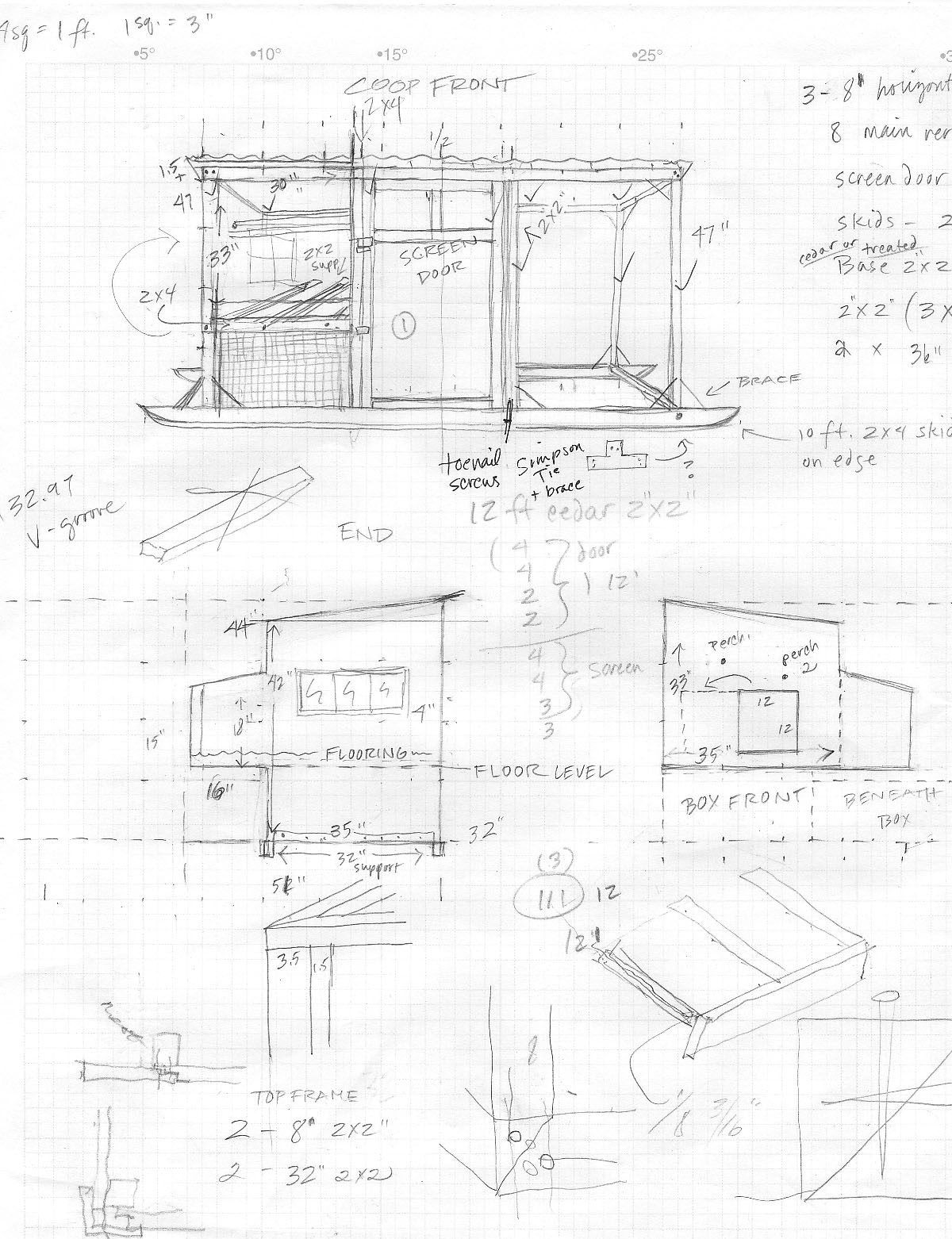
    To the right you can see part of the hen scratched plans for the little coop I've designed with Rick's help and with tips from numerous sources. Most of the framing pieces are cut, primed, and drying in the basement. Next week I'll be buying 2 or 3 chicks. While their little home airs out from being painted, and while they mature enough to live in it, they'll be staying in a cozy brooder box.

    I will add subsequent chapters to these developments on the home front. You are invited to follow along :-).


  • The deep south has many draws: architecture, long U.S. history, hospitality, and beauty of different kinds than surrounds us here in the Pacific Northwest. When researching my recent trip to Georgia and South Carolina, I did not expect to find this surprise: a National Monument called Ocmulgee at the edge of Macon, Georgia. We visited there on May 5 after exploring the city and its antebellum mansions (spared by Sherman on his "March to the Sea" during the Civil War) and before driving to Savannah. In spite of the temps in the 90's and the tropical humidity, it was enthralling.

    Here is a small sketchbook spread of quick drawings I made of the pottery found in the small, beautiful museum housed in the original Art Deco building at the Park entrance. Paleo-Indians lived on this site from Pre-9000 BCE, but the most dominant group that lived here were the Mississippians (900 AD to post-1350 AD ~ the "Lamar" Mississippians were the later ones). It is the Missisippian people who produced pottery:

    OcmulgeeSketches
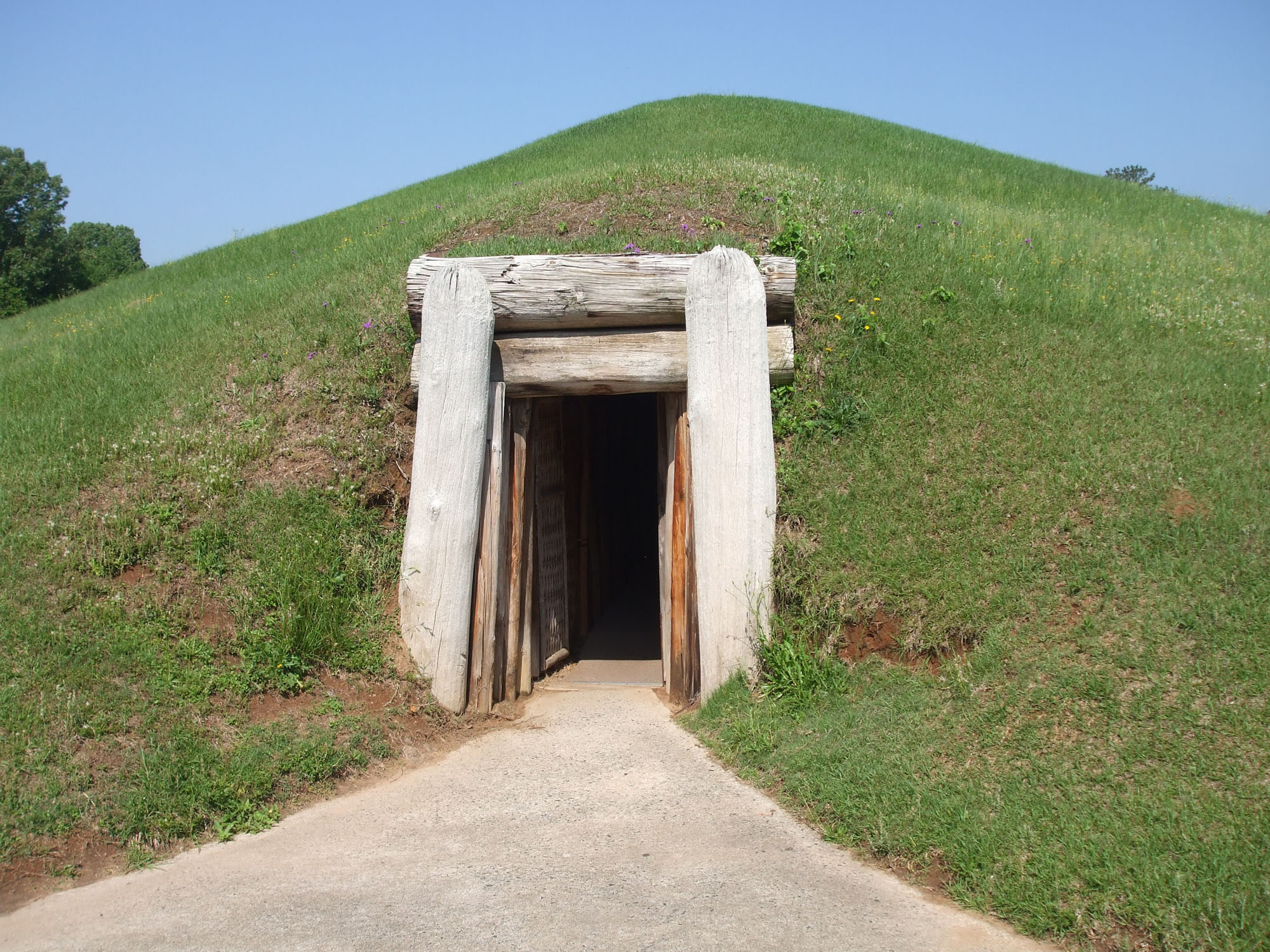
    The massive, grass-covered earth mounds at the Monument were created by the Mississippians and remain largely intact, although 20th c. railroad development destroyed some of them. Here is a photo of the entrance to the ceremonial Earth Lodge which has been reconstructed inside to appear as it would have over a thousand years ago. Going inside was a very moving experience. The clay floor within is the original, and contains sculpted seats for tribal leaders, and a huge eagle effigy. I should have taken more photos! I thought the site brochure would have more images in it.

    Earthlodge
    To learn more about this fascinating site, go to: Ocmulgee National Monument.

  • If you've traveled to Italy, you've at least seen panforte, if not eaten it. This dense, spicy, nut and dried fruit-filled confection comes in several specialized recipes and sizes. Not your ordinary fruitcake, it was the mainstay of traveling monks' diets, or so they say. "Strength bread" is a rough translation.

    After our trip to Italy with our mom, my sister and I decided to research recipes and produce our own version of panforte for Christmas gifts. We designed the packaging, of course, and my solution for the lettering of the word itself came in the form of Lombardic-styled versal letters, popularly used in manuscripts of the 13th to the 15th centuries. Voluptuous and appetizing, the letters themselves seem to celebrate this historic food!

    PanforteDrop
    The letters were drawn in pencil, inked in with a technical pen, and retouched somewhat. The red dots were added digitally. (Foodies' tip: genuine Italian panforte is available at DeLaurenti's at the Pike Place Market in Seattle).

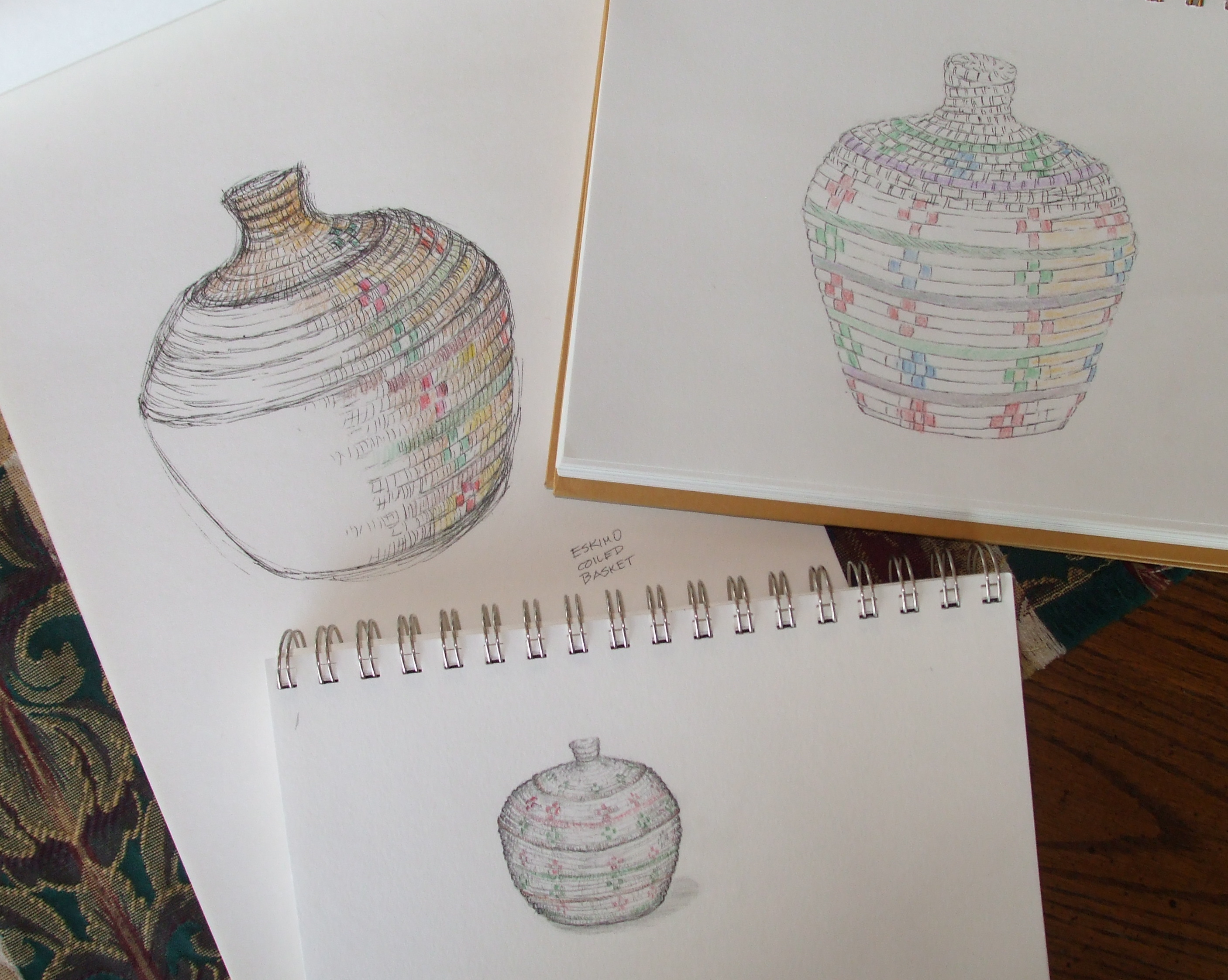
  • My little weekly drawing group met as usual on a Tuesday morning, early. No drawing subject matter had been pre-planned, so over rhubarb crisp and fresh coffee (it's not just about drawing), I suggested we draw one of the baskets in my friend's collection. We spent about an hour + 15 minutes sketching, challenged by the subtle shape of the basket, the rows of coils, and the dyed skin pattern detail. It was interesting to see the three very different approaches to rendering the basket! A little more work was done on the sketches later on, and there's more yet to be done on the two larger basket sketches.

    DSCF5018

    Three sketches of the Eskimo basket. My drawing is on the upper left.

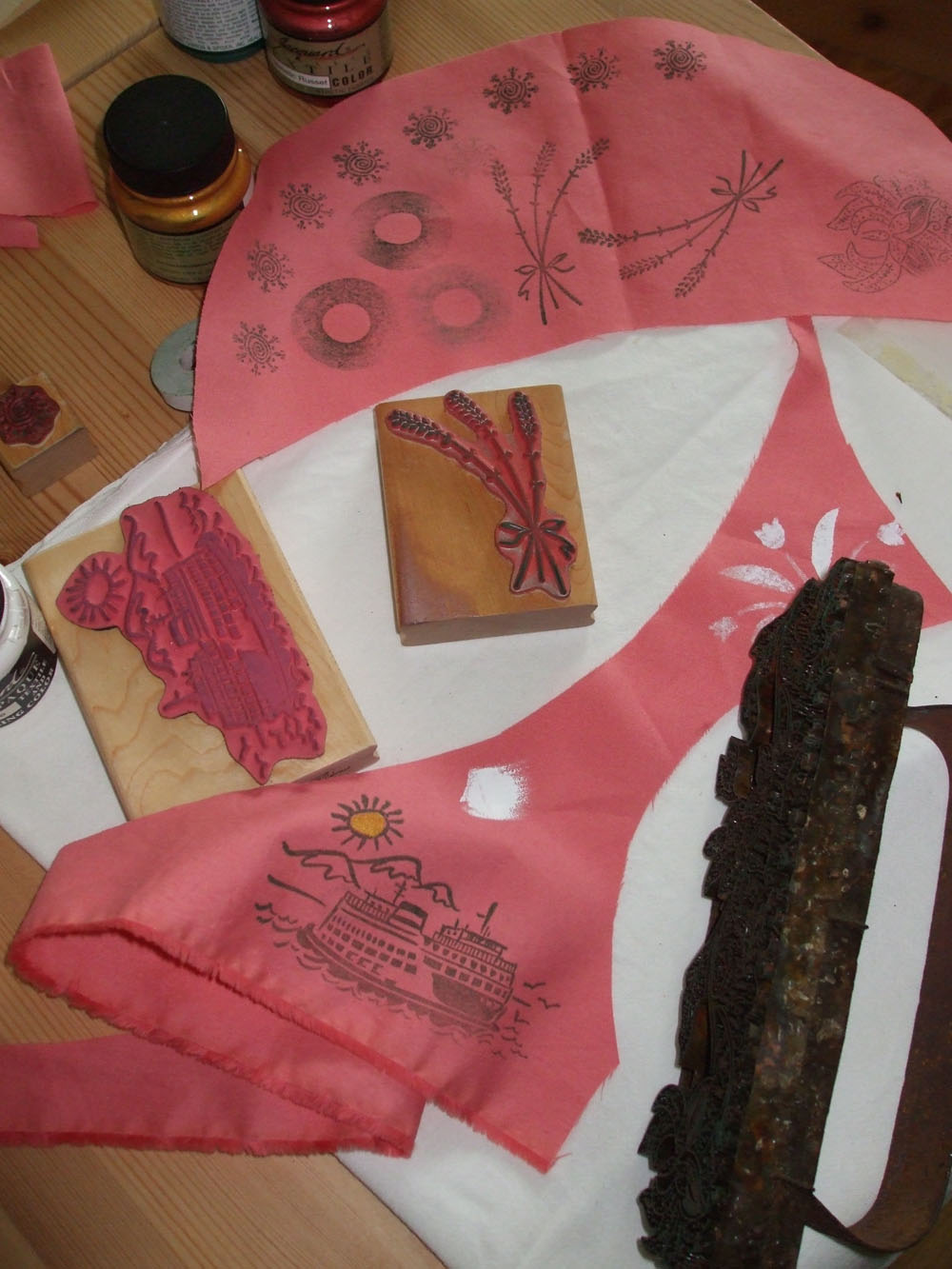
  • In my earlier years as an artisan, I did a lot of textile artwork: batik, embroidery, stenciling and quilting. This is one of the reasons why Soft Shelter Hats has been so much fun to create. Christine, my hat buddy from Ashland, OR, dyes all her own fabrics for her one-of-a-kind cotton hats. For summer styles, I've wanted to create some unique cotton and linen hats using my own decorative elements. I've begun the experimentations as shown in the photo below. Keep an eye on Soft Shelter Hats for all of our fresh new millinery designs.

    DSCF4995 Using textile
    stamp pad ink, I'm trying out rubber stamps of my drawings, and an
    antique brass fabric-printing stamp. Stencils will also be used with
    fabric paint. I'm planning to design a Seattle hat with Space Needles
    and ferries.

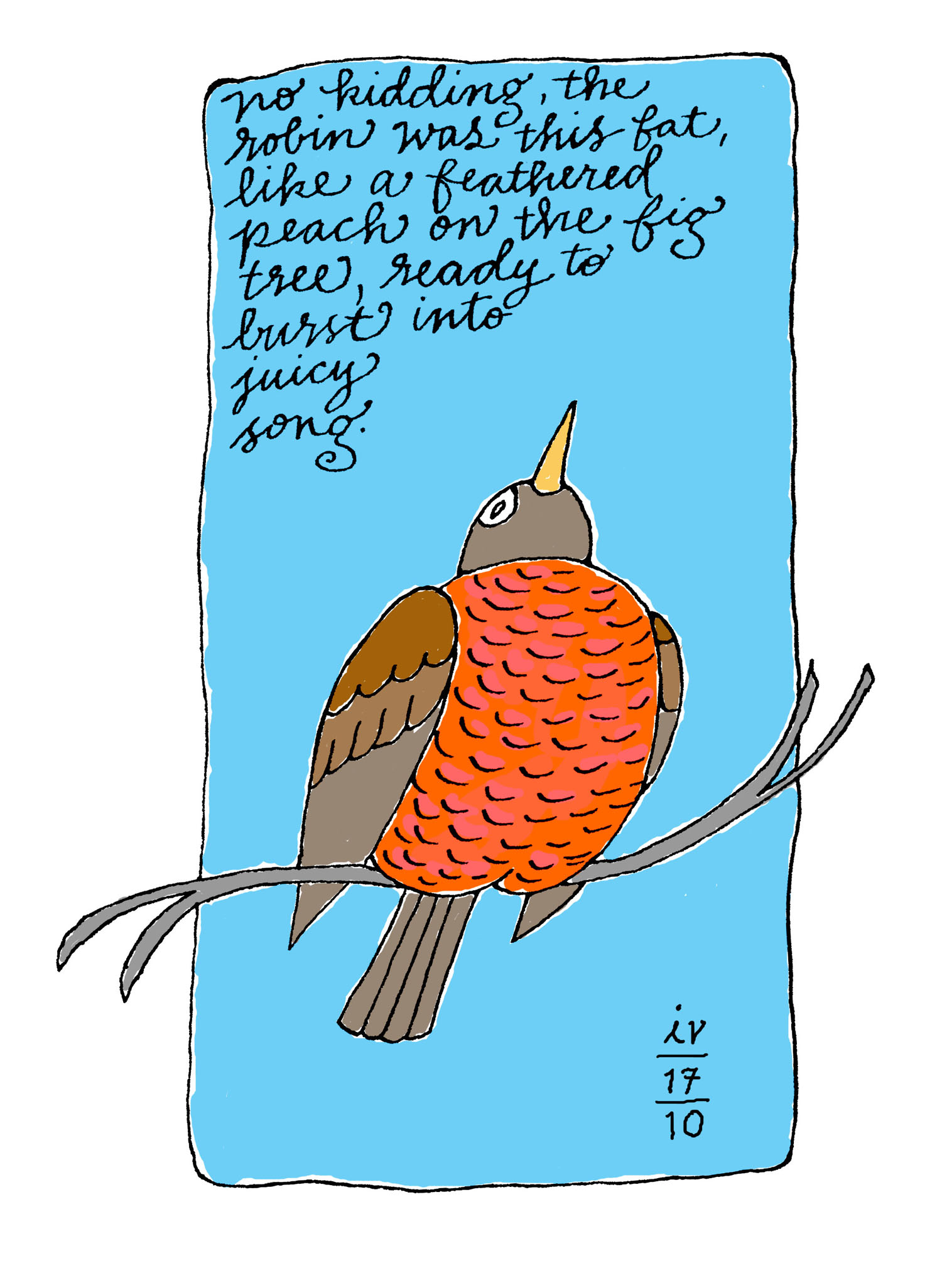
  • My yard is attracting robins. Slim, paler ones that are busily collecting nesting materials – rotund, chesty ones that are on worm-plucking duty, and one extraordinary one that was meditating in the fig tree yesterday. Against the clarity of the blue sky, this robin was beyond plump. I looked at it from below, in awe, taking time out from my weeding. Once back in the studio, I made a small sketch. Today, using the sketch, I created the cartoon below. Welcome, robins!

    Robin

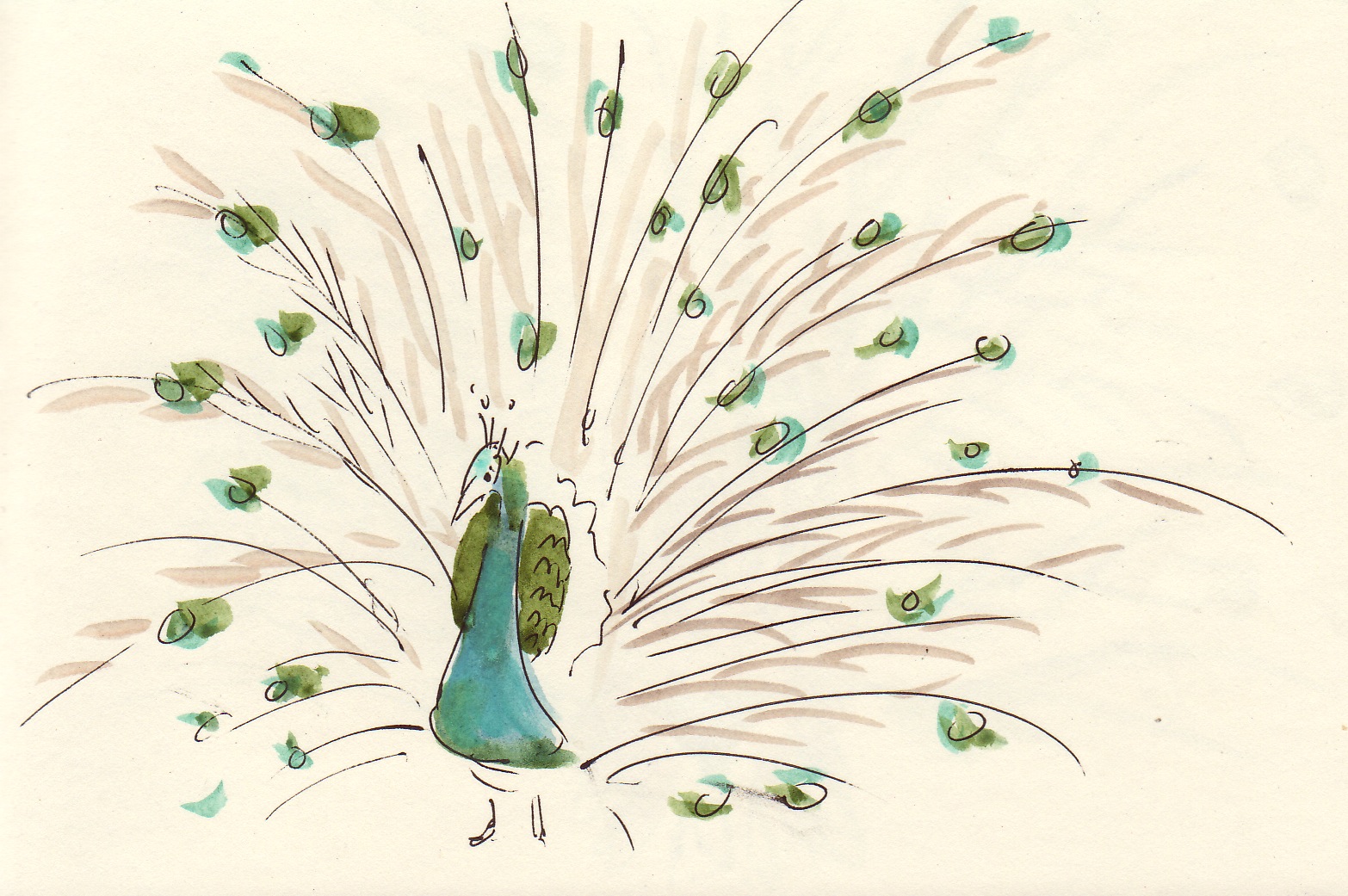
  • Peacockfront

    Peacocksketch


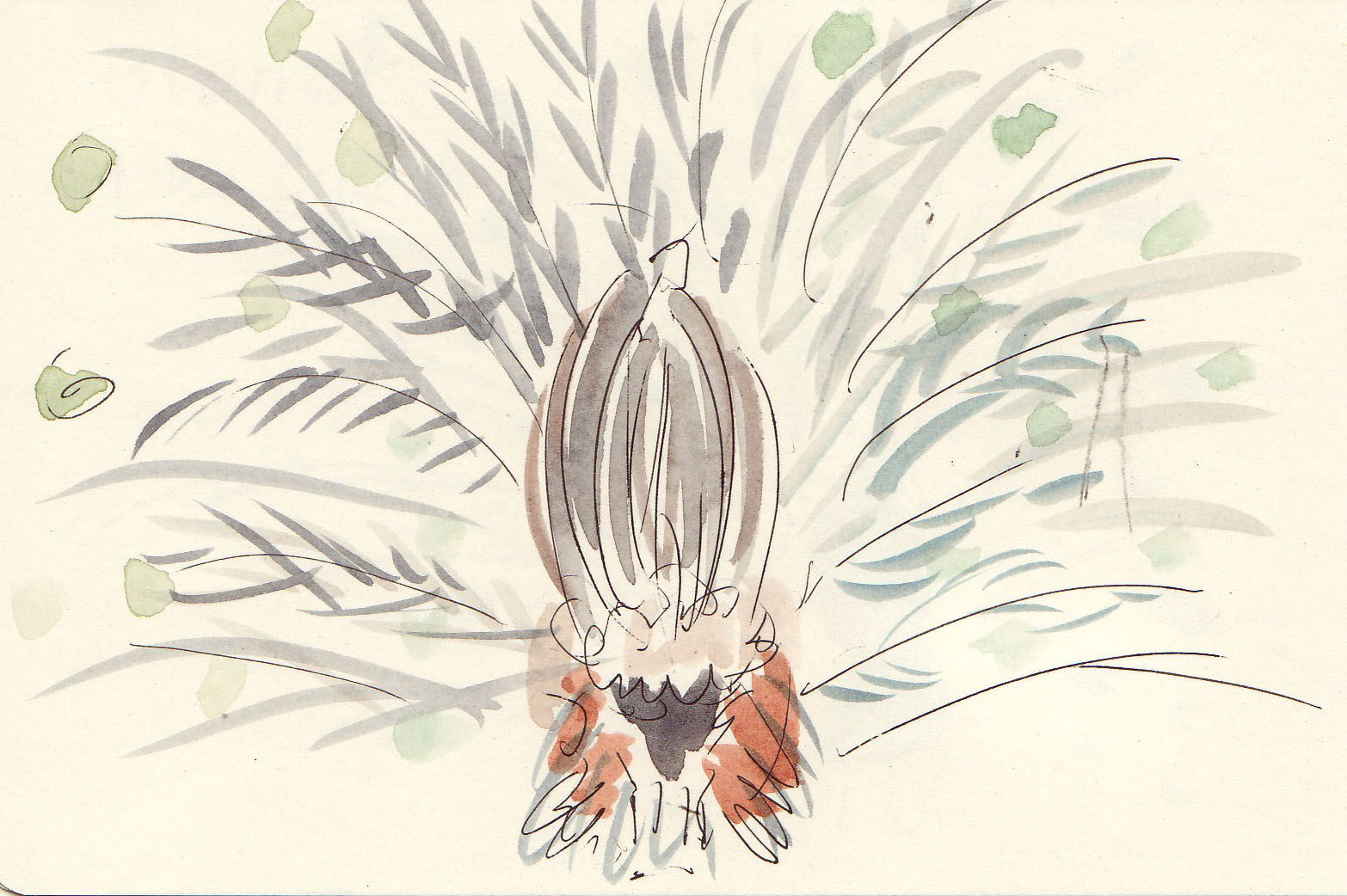
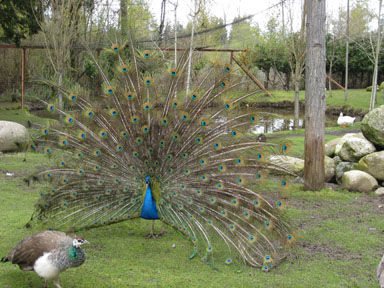
    Is it possible to take peacocks for granted? They appear so often in the decorative arts that we stand to become blasé about their genuinely spectacular appearance. Last week my friend Marilyn and I went to a favorite nursery: Flower World in Snohomish, WA. Where one turns off the main road to get to the nursery is their produce and cider shop and a variety of livestock enclosures. Chickens abound (their eggs are sold there), lambs gambol about with their mothers, and the regal peacocks wander about with ducks and rabbits. It appeared to be high mating season, for the male birds were displaying fervently to the nonchalant, grazing hens. We watched for quite awhile even though the rain was coming down and the wind blew through our jackets. Peacocks don't lend themselves to 30-second sketches, but I did them anyway. Marilyn took fine photos of one of the urgent males; here they all are! One can't help but be reminded where the name peacock blue comes from. We were especially appreciative of the underrated, handsomely feathered rear side of the peacock which resembles a flamboyant Plains Indian headdress.

    Peacockrear    Peacocksketchrear              


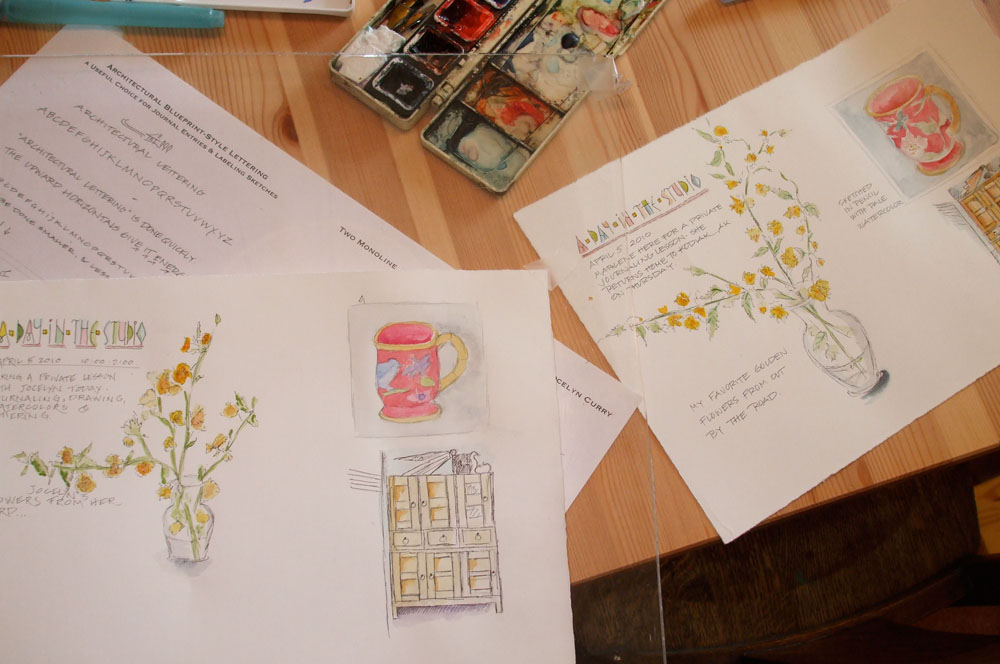
  • After teaching Nature Journaling at the North Cascades Institute Learning Center last July, I was asked by Marlene, one of the 15 students in the class, whether I would give her a private lesson sometime in quick sketching and light journal writing techniques. A keen learner with specific goals, she knew she'd benefit by this method of tutoring. Our three-hour session was spent in my studio yesterday as we worked in tandem with pen, pencil and watercolor. To provide a range of subjects, we sketched a vase of spring flowers, our teacups, and some of the pine furniture in my studio. A challenging range – but very well done! Marlene's nearly-completed page (more writing around the drawings will be done) is on the left.

    Journaling lesson